
To 200 and Beyond

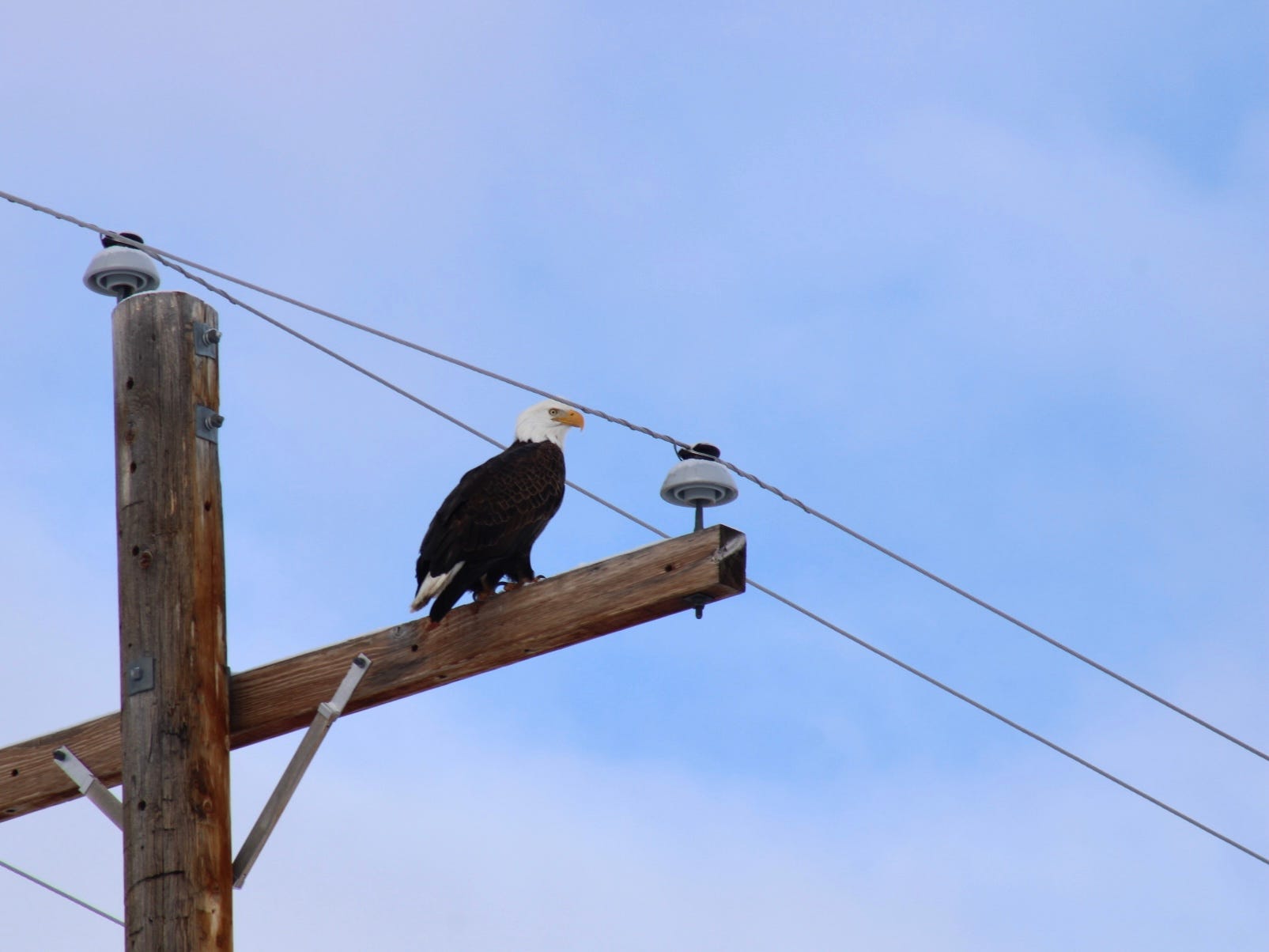
When I saw my 196th Carbon County year bird, a Dusky Grouse just off the road in Price Canyon Recreation Area, I pessimistically thought that it would be the last of 2025. I was a little dejected when I predicted that I wouldn’t get to my goal of seeing 200 in the county. It was late October, and soon every body of water would be frozen over. I had looked at my list, and that 196th bird, was the last probable species I could track down. Even if I got one or two additions, there was no way I was getting four more.
Three weeks after that sighting, I was looking at eBird checklists from within the county. Usually, these reports are slim, as there is one other birder in town. That day, I saw the names of two trusted sources that don’t live here, but they had recently visited Scofield Reservoir, where they found what would be three year birds for me: two Tundra Swan, a single Trumpeter Swan, and a Herring Gull. The weather was starting to turn cold, but not enough that the lake would completely ice over and push the birds somewhere warmer. This would be a search with a high probability of success, since both swan species are all white and are 4-5 feet in length. They would be easy to spot on the medium sized reservoir.
On November 28th, a few days after I saw the report, I drove up to Scofield. The reservoir was starting to freeze along the shoreline, but dabbling ducks were congregating on the open water adjacent to the ice. From the car, I could see the white head stripes and emerald-green cheeks of American Wigeon, and the larger grayish-brown bodies of Gadwall. A snow storm had recently dusted the peaks that surrounded the basin the lake lies within. I was headed to the south end, where I thought swans were most likely, due to the shallow water and dense aquatic vegetation. I didn’t stop for anything along the way.
At the southeast end of the reservoir, there are large dumpsters that serve the tiny community of Scofield. These are contained within a large asphalt pullout, which is a great place to scope for birds. Before I even stopped the car, I could distinctly make out three swans, around 150 yards away. When I got the scope set up, the first bird I pointed it at was a Trumpeter Swan, a rare winter visitor in the state of Utah. I identified one of the Tundra Swans next, for my 198th species of the year. Tundra and Trumpeter Swans are very similar. Trumpeters are slightly larger, and have a more sloped bill that never shows any yellow. Tundra bills often, but not always, show yellow at the base. Trumpeter Swans have forehead feathers that come to a point, where those of Tundra are more rounded. This was the first time I had seen both species next to each other to make these comparisons.
After watching the swans for a few moments, my bare hands began to sting in the cold; holding metal optics in the winter tends to hurt. There were some birds on the other side of the lake that I couldn’t pick up in my scope, so I decided to drive around the south side, through the small community of Scofield, and to the southwest shore, where there at least wouldn’t be coal trucks buzzing by every few minutes.
When I got over there, I realized that there wasn’t much more than a raft of hundreds of coots, and a large brown gull standing atop a muddy jetty. I put my scope on the gull, and it spread its wings to show a light inner-primary panel, which confirmed my suspicions that it was a juvenile Herring Gull, my 199th species of the year.
I knew where my number was, and I knew that there were two recently reported birds still at the lake that could get me to 200. If I could find either the Surf Scoter, or the Hooded Mergansers that had recently been entered into eBird, I would accomplish my 2025 goal. I looked with a renewed intensity, but could not locate either. Most of the land around the reservoir is private property, and there are only a handful of accessible viewing spots. These two birds could be anywhere, and needing to get home, I made the decision to come back the next day.
I made the 45-minute drive again on the 29th. I went straight for the dumpsters where I would set up my scope for a second straight morning. When I arrived, I immediately noticed the absence of the swans. There wasn’t any waterfowl on the south end of the lake. I saw some movement, but it was mechanical. I looked through my scope in that direction, and saw the wings of a decoy incessantly flapping. Next to the decoys, a man was lying in a coffin (a flat blind that allows a hunter to lie on their back in shallow water), fiddling with his shotgun. I swung my scope to the north, and saw that the hunter had pushed the ducks further onto the body of the lake, out of shotgun range. I got back in my car to see if I could find a wide shoulder near the birds where I could get out and scope the conveniently congregated waterfowl.
I found a place barely wide enough and eased off the highway. Coal trucks roared by me, so close that the gusts of wind threatened to blow the hat off my head. I set up the scope as far away from the road as I could get without crossing the fence line that was marked as private. I started scanning the ducks, and saw mostly divers, which was a good sign because it meant that the water in front of me was deeper, perfect for scoters and mergansers. There were hundreds of Lesser Scaup, Redheads, Common Goldeneye, Bufflehead, and one Hooded Merganser. I had seen my 200th bird of the year, but I wanted to finish looking through everything in front of me. I would head home afterwards, so, I figured I might as well. After a short celebration, I continued to scan. I found a huge duck that was floating low on the water. It had a knobby bill, a dark cap, a white circular spot on the back of the head and a more vertical white patch towards the bill. This typically seafaring visitor was my 201st species of the year, a Surf Scoter. I watched the bird for a moment, then looked back at my small passenger car that was barely on the other side of the highway’s white line, and rather than further risk it being demolished by a semi truck, I decided it was time to go home.
In late October, when I saw a Dusky Grouse, I thought for sure that would be one of my last species of the year, and figured there was no way I would reach my goal of 200. I don’t typically add many birds to a year list after fall migration winds down in late September, and I certainly would not have bet on getting four-plus more.
At the beginning of 2025, I plotted out my year. I counted up all the regular species that I would have to try not to see, and got to around 170. When I added some species that I see frequently, but have to look harder for, the tally was at 190. I would need to find all of those, plus at least 10 surprise birds that didn’t make the initial count (Surf Scoter, Trumpeter Swan, and Tundra Swan are in this category). I missed a couple in the frequent-but-not-for-sure category, but made up for those losses with many surprise birds. I have seen 22 county lifers over the last 12 months. I still didn’t think I was getting to 200 until I was actually there.
It is now mid-December, and as I write this recap, I sit at 203 species on the year (more on that later). I started 2025 saying this wasn’t a big year, that I was after 200, which would happen to break my record of 173 along the way. Big year or not, it’s the last number I hope to chase. I would be surprised if this record will ever be broken. I don’t mean to come off as as a braggart, I just didn’t think it could be done by anyone.
I will end this with some photos of some of my favorite species I saw during 2025, as well as a complete list. Some of these are not the best pictures, but they serve as a record of an encounter. All these sightings made me sing songs of joy, joining in a chorus with the birds I love so much.


A complete list of my 2025 Carbon County bird sightings in the order they were recorded in eBird: House Finch, House Sparrow, Northern Flicker, White-winged Dove, Eurasian Collared-Dove, Dark-eyed Junco, American Robin, Red-breasted Nuthatch, Mountain Chickadee, Common Raven, Cedar Waxwing, European Starling, Rock Pigeon, Song Sparrow, White-crowned Sparrow, Mountain Bluebird, Horned Lark, Black-billed Magpie, Northern Harrier, American Kestrel, Golden Eagle, Woodhouse’s Scrub-Jay, Merlin, Townsend’s Solitaire, American Crow, Red-tailed Hawk, California Quail, Cooper’s Hawk, Bald Eagle, Sharp-shinned Hawk, Mallard, Juniper Titmouse, Bewick’s Wren, Northern Pygmy-Owl, American Dipper, Downy Woodpecker, Black Rosy-Finch, Gray-crowned Rosy-Finch, Northern Shrike, Yellow-rumped Warbler, Northern Mockingbird, Western Meadowlark, Pinyon Jay, American Goldfinch, Ruby-crowned Kinglet, Ring-necked Pheasant, Loggerhead Shrike, Prairie Falcon, Red-winged Blackbird, Spotted Towhee, Steller’s Jay, Bushtit, Ruddy Duck, Wild Turkey, Peregrine Falcon, American Barn Owl, Common Merganser, Common Goldeneye, Redhead, Great Horned Owl, Gadwall, Green-winged Teal, Canada Goose, Sandhill Crane, American Coot, Ring-necked Duck, Lesser Scaup, American Wigeon, Killdeer, Rock Wren, Vesper Sparrow, Greater Sage-Grouse, Ring-billed Gull, Lincoln’s Sparrow, Turkey Vulture, Long-billed Dowitcher, Belted Kingfisher, Cinnamon Teal, Say’s Phoebe, Bufflehead, Tree Swallow, Great Blue Heron, Pied-billed Grebe, American Avocet, Sage Thrasher, Pine Siskin, Lesser Goldfinch, Barn Swallow, Northern Shoveler, White-faced Ibis, Franklin’s Gull, Vermillion Flycatcher (this bird has returned to the same spot two Aprils in a row), Lesser Yellowlegs, Ferruginous Hawk, Osprey, American White Pelican, California Gull, Wilson’s Snipe, Marbled Godwit, Red-breasted Merganser (species #100), Brewer’s Blackbird, Snowy Egret, Mourning Dove, Yellow-headed Blackbird, Least Sandpiper, Common Loon, Western Grebe, Greater Scaup, Cassin’s Finch, Blue-gray Gnatcatcher, Green-tailed Towhee, Swainson’s Hawk, Spotted Sandpiper, Red-named Sapsucker, Black-crowned Night Heron, Double-crested Cormorant, Clark’s Grebe, Eared Grebe, Western Sandpiper, Greater Yellowlegs, Wilson’s Phalarope, Blue-winged Teal, Clark’s Nutcracker, Western Kingbird, Northern Rough-winged Swallow, Bank Swallow, Lark Sparrow, Brewer’s Sparrow, Sora, Brown-headed Cowbird, Cliff Swallow, Chipping Sparrow, Bullock’s Oriole, Violet-green Swallow, Wilson’s Warbler, Northern House Wren, Northern Yellow Warbler, Black-chinned Hummingbird, Ash-throated Flycatcher, Great-tailed Grackle, Yellow-breasted Chat, Gray Catbird, Western Flycatcher, Orange-crowned Warbler, Black-throated Gray Warbler, Gray Flycatcher, Black Headed Grosbeak, Plumbeous Vireo, Virginia’s Warbler, MacGillivray’s Warbler, Lazuli Bunting, Blue Grosbeak, Common Yellowthroat, Western Tanager, Western Wood-Pewee, Western Warbling Vireo, Dusky Flycatcher, Olive-sided Flycatcher, Black-throated Sparrow, Willow Flycatcher, Green Heron (first county record), Grace’s Warbler, Red Crossbill, Hermit Thrush, Hairy Woodpecker, Broad-tailed Hummingbird, Common Nighthawk, Fox Sparrow, Purple Martin, Forster’s Tern, Caspian Tern, American Three-toed Woodpecker, White-throated Swift, Sagebrush Sparrow (Species #174, which broke my previous record), Chukar, Black-capped Chickadee, American Goshawk, White-breasted Nuthatch, Rufous Hummingbird, Calliope Hummingbird, Pygmy Nuthatch, Northern Waterthrush, Savannah Sparrow, American Redstart, Nashville Warbler, Clay-colored Sparrow, Cassin’s Vireo, Northern Pintail, White-throated Sparrow, Evening Grosbeak, Brown Creeper, American Pipit, Horned Grebe, Pectoral Sandpiper, Canvasback, Dusky Grouse, American Herring Gull, Tundra Swan, Trumpeter Swan, Hooded Merganser, Surf Scoter, Chestnut-sided Warbler (first county record), Ruffed Grouse.
Congrats on reaching your goal and sharing your stories and encounters. Fun to see how you are so excited to see Surf Scoters and Hooded Mergansers, something so common in my neck of the PNW. It's good to be reminded that what we sometimes take for granted is rare and exciting elsewhere and that we should also remember to be more attentive to "our" "local" birds. Keep on sharing. Happy new year.
What a wonderful way to end the year! I love hearing birders share about their county goals and sightings (as opposed to a nationwide or worldwide Big Year) because it reminds me how many amazing things we can see close to home if we just take the time to pay attention. I look forward to future essays about how you got to 203!